The Fakes Fight Back!
Norval Morrisseau fakes to help ward of new ones
More than 50 counterfeit Norval Morrisseau paintings have been permanently removed from the market—but experts say thousands are still out there.
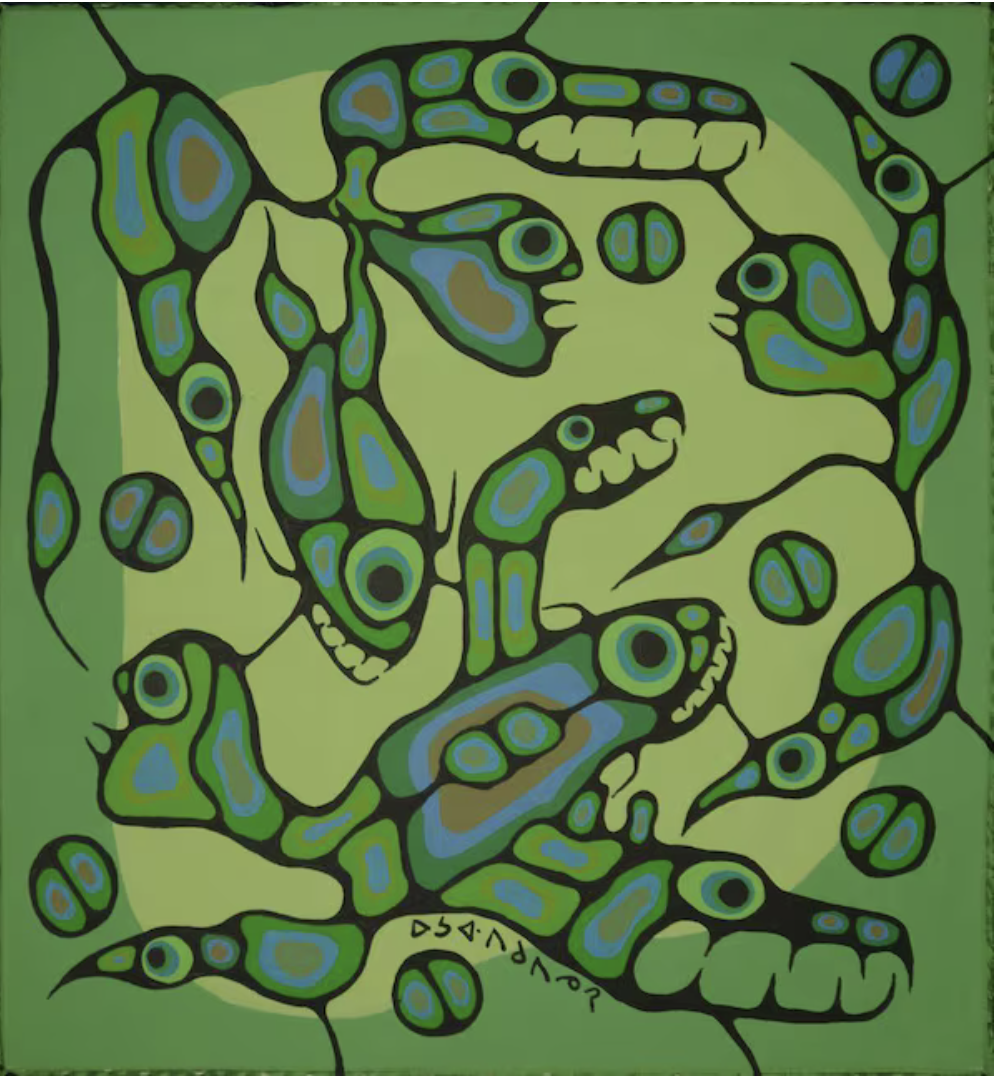
How many fake paintings does it take to fill a warehouse? If the artist is Norval Morrisseau, the answer may be far more than anyone wants to admit. This week, Toronto-based Art Experts Canada announced it had removed more than 50 counterfeit Morrisseau paintings from circulation, marking each one permanently as a forgery to ensure it can never again be sold as the genuine article. It's an unusual step, but one born of an extraordinary problem. Experts estimate that while police have already seized roughly 1,000 fake Morrisseaus, another 4,000 to 6,000 may still be circulating through galleries, auction houses, and private collections. It's enough to make collectors wonder whether the rarest Morrisseau on the market might be an authentic one. The counterfeit works emerged from what has become the largest art-fraud investigation in Canadian history. Over more than a decade, organized forgery operations flooded the market with paintings falsely attributed to Morrisseau, the celebrated Anishinaabe artist often called the "Picasso of the North." The scandal culminated in multiple criminal convictions, with sentencing still underway for several defendants. Rather than destroying the newly identified fakes, Art Experts Canada plans to preserve them as an educational archive. Each counterfeit tells investigators something about the techniques, materials, and recurring mistakes used by the forgers. In other words, today's fake could become tomorrow's forensic evidence. So how do experts separate a genuine Morrisseau from an imitation? It's rarely a single giveaway. Authenticators examine provenance, pigments, signatures, stylistic details, and Morrisseau's evolving visual language throughout his career. According to Art Experts Canada CEO Jonathan Sommer, one recurring clue appears in many forgeries: compositions that leave an awkward empty space in the center while crowding imagery around the edges—a design choice largely inconsistent with Morrisseau's artistic practice. Even so, authentication is rarely as simple as spotting one misplaced line or suspicious signature. Art fraud, like good forgery, thrives in the gray areas. Owners who unknowingly submit fake paintings often react with disappointment, but many are surprised to learn their counterfeits still have value—not as art, but as evidence. Rather than allowing them to disappear back into the marketplace, Art Experts Canada keeps them for research and permanently marks them as inauthentic, preventing the works from resurfacing years later with a new story and a fresh price tag. It's an ironic twist. The fake paintings that once deceived collectors may now become one of the best tools for exposing the next generation of forgeries. In the battle against art fraud, even the fakes have found an honest purpose.