McCloud and the Institute of Illegal Images
When collecting folk art was treated as a federal drug crime
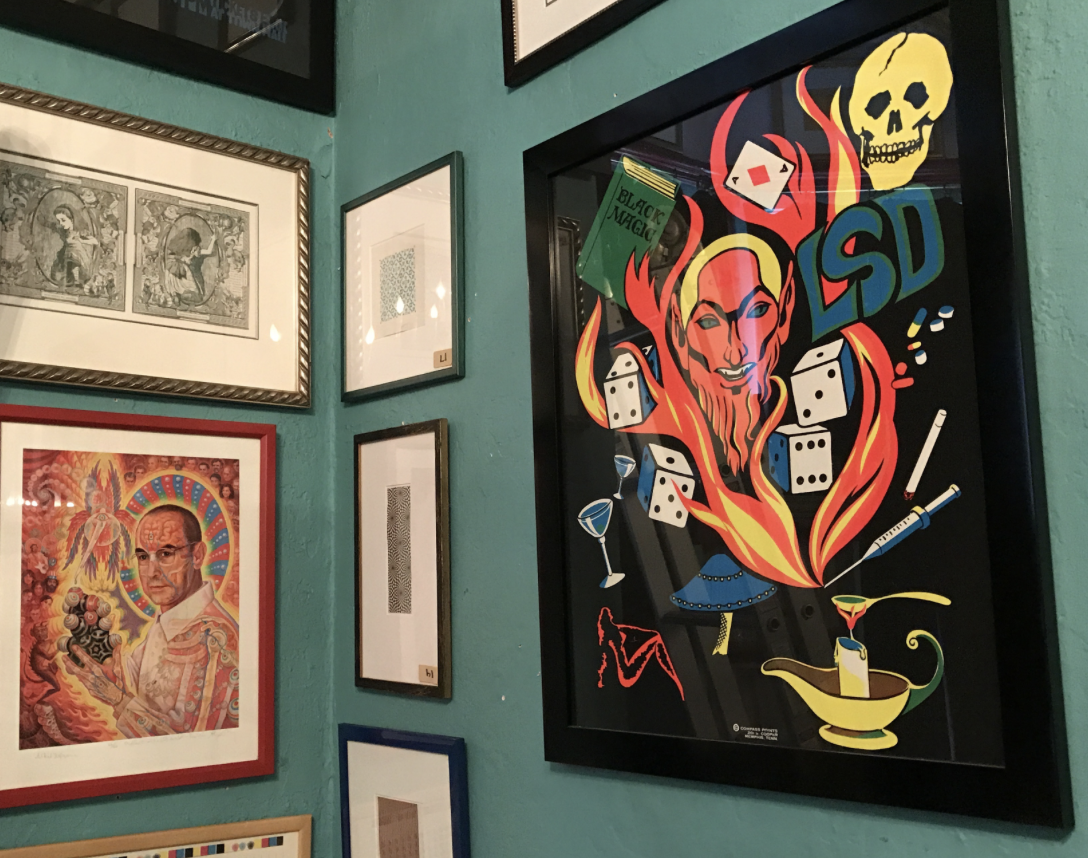
Image: courtesy / press
Mark McCloud built the world's largest archive of LSD blotter art — and was twice prosecuted by the federal government, which argued the paper itself was a drug. Two juries disagreed.
Blotter art — the perforated sheets once used to carry doses of LSD — is a distinctly American ephemeral form, printed with mandalas, cartoon characters, and countercultural icons. Mark McCloud has collected it since the 1970s, amassing more than 33,000 sheets in his San Francisco home, which he calls the Institute of Illegal Images.
In 1992, and again after a 2000 SWAT-style raid that carted off hundreds of framed works, federal prosecutors charged him with conspiracy to distribute LSD, contending that supplying undipped blotter paper made him part of the drug trade. Forensic testing found no LSD on the seized art.
McCloud's defense argued that blotter art is a legitimate folk-art tradition and that he was a collector and artist, not a chemist. Juries in Texas and in Kansas City acquitted him both times. The case sits at the intersection of drug policy, censorship, and the question of what a museum is permitted to preserve.