Results for “dali”
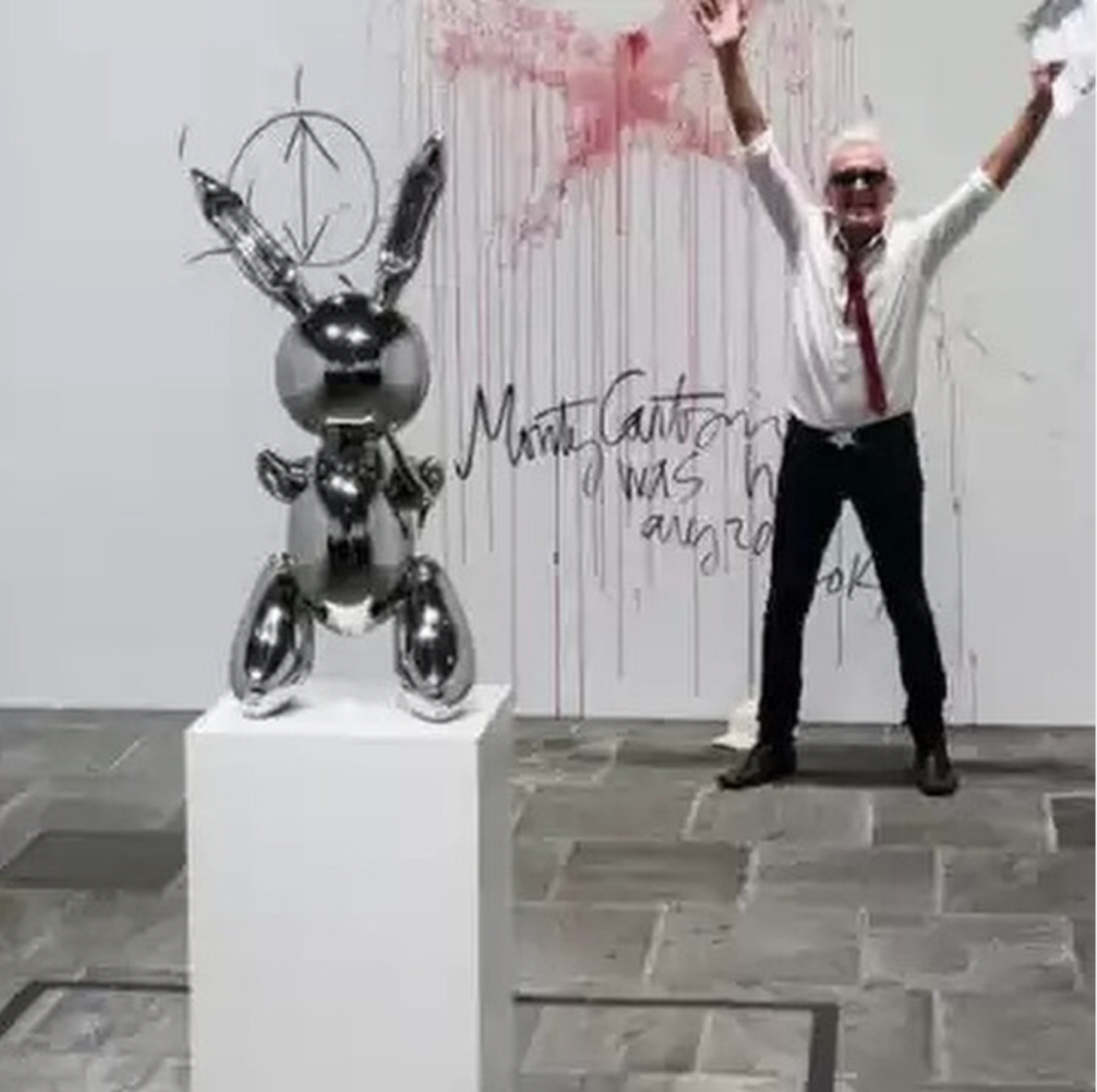
Istvan Kantor's Blood X
For over four decades Istvan Kantor — Monty Cantsin, founder of Neoism — has hurled his own blood in a great X across the walls of major museums, courting arrest as part of the artwork itself.

Piss Christ and the Culture Wars
Andres Serrano's 'Piss Christ' — a crucifix immersed in the artist's urine — ignited a firestorm over public arts funding, drawing denunciations from the U.S. Senate, vandalism, and death threats that continue decades later.
Andres Serrano
American photographer whose 1987 work 'Piss Christ' — a crucifix submerged in the artist's urine — became one of the most controversial images in American history, provoking congressional attacks on public arts funding, vandalism, and death threats.

Gustave Courbet
The father of Realism, whose frank nudes and radical politics scandalised the establishment. After the 1871 Paris Commune he was imprisoned and held liable for the toppling of the Vendôme Column, dying in exile.

Egon Schiele
Austrian Expressionist whose raw, erotically charged nudes scandalised Vienna. Arrested in 1912 on charges relating to his drawings, he saw more than a hundred works seized as obscene — and one reportedly burned by the judge in the courtroom.
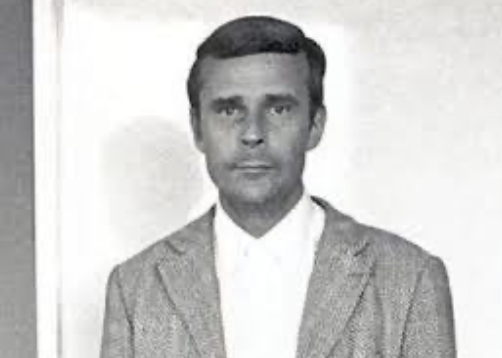
Hans-Joachim Bohlmann
Between 1977 and 2006, the German serial vandal attacked more than 50 paintings, inflicting damage estimated at over 270 million Deutsche Marks (roughly €138 million). Armed not with knives or hammers, but bottles of concentrated sulfuric acid, he permanently scarred works by Rembrandt, Peter Paul Rubens, Albrecht Dürer, Lucas Cranach the Elder, and Paul Klee, becoming one of the most destructive figures in the history of museum crime. Bohlmann's life was marked by severe mental illness from adolescence. After years of psychiatric treatment—including electroshock therapy, heavy medication, and even a controversial lobotomy that failed to improve his condition—his life took a tragic turn in 1977 when his wife died after falling from a window while cleaning their apartment. Bohlmann later claimed her death triggered his attacks on art. Just days after the funeral, he purchased sulfuric acid and began targeting museums. His first museum victim was Paul Klee's Golden Fish at Hamburg's Kunsthalle. Within months, museums across Germany were on edge as he moved from city to city, spraying acid directly onto paintings. He frequently aimed at the faces of portraits, seeking to inflict the greatest possible damage. Among his most devastating attacks were acid assaults on Lucas Cranach the Elder's portraits of Martin Luther and Katharina von Bora, Rubens's Archduke Albrecht, several Rembrandts in Kassel, and in 1988, three masterpieces by Albrecht Dürer at Munich's Alte Pinakothek, causing an estimated €35 million in damage. Arrested repeatedly, Bohlmann served prison sentences and spent years in psychiatric hospitals, but each release was followed by new attacks. Even after authorities prohibited him from purchasing sulfuric acid, he turned to arson before eventually returning to museum vandalism. In a strange twist, Bohlmann participated in art therapy during his confinement, producing roughly 1,500 paintings over nine years. The treatment, however, did little to curb his destructive impulses. His final major attack came in 2006 at Amsterdam's Rijksmuseum, where he doused Bartholomeus van der Helst's monumental Banquet of the Amsterdam Civic Guard in Celebration of the Peace of Münster with lighter fluid and set it ablaze. Fortunately, most of the damage was confined to the painting's varnish layer, allowing conservators to restore the work. Unlike most criminals featured in art history, Bohlmann wasn't driven by money or prestige. He wanted recognition through destruction. Every attack generated headlines, reinforced his notoriety, and forced museums to confront an unsettling reality: one determined individual with a small bottle of acid could inflict damage that centuries of history could never fully repair.
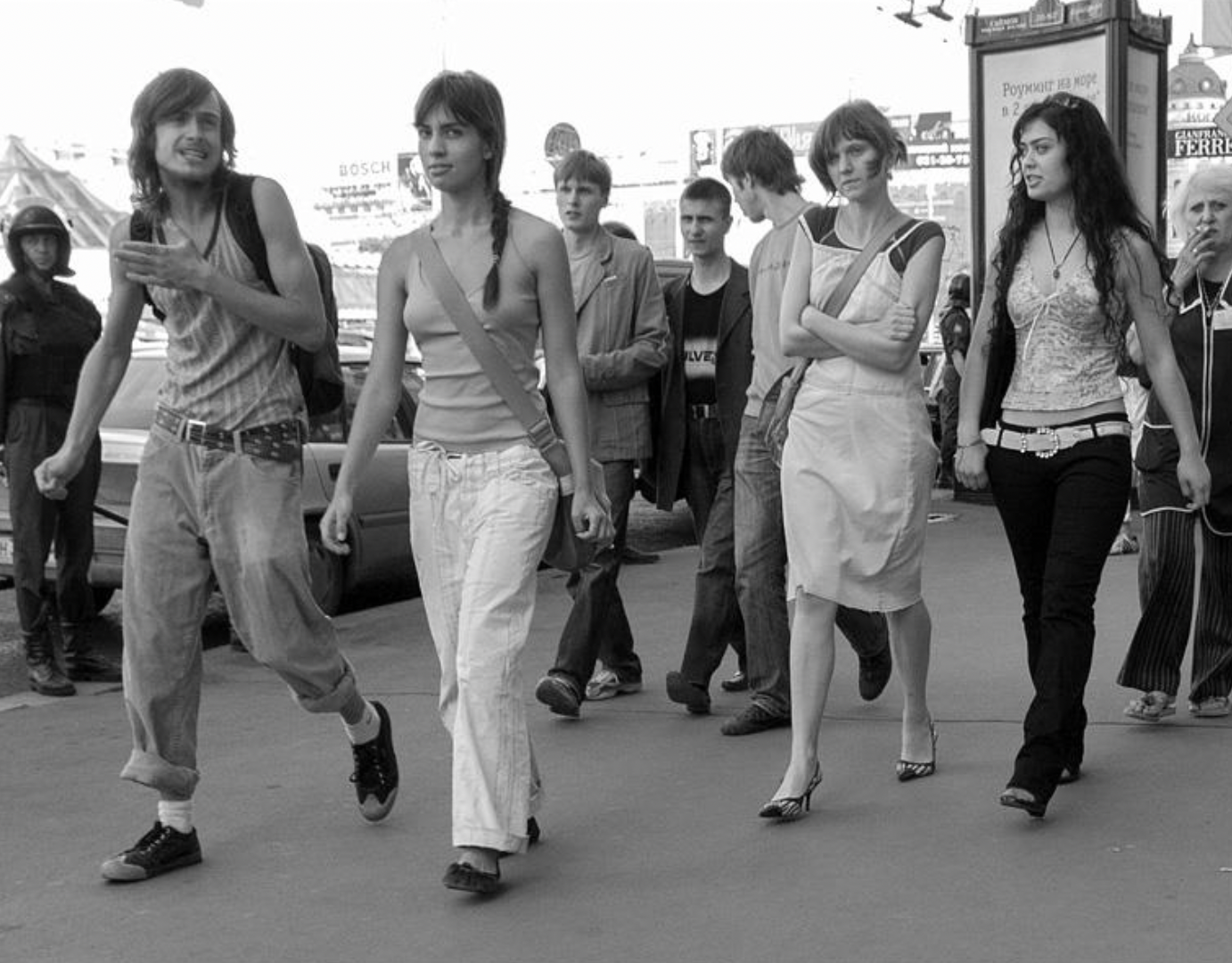
Voina
Few contemporary art groups have generated as much controversy—or as many criminal charges—as Voina ("War"), the Russian performance art collective founded in 2007. Part political activists, part conceptual artists, and part provocateurs, the group rejected galleries, museums, and the commercial art world in favor of disruptive public performances that challenged the authority of the Russian state. Voina believed that the artwork wasn't an object—it was the event itself. Their performances ranged from surreal pranks to acts of vandalism, often ending with arrests and international headlines. Among their most famous actions was Dick Captured by the FSB (2010), in which they painted a 65-meter phallus on a drawbridge in St. Petersburg. When the bridge opened, the image stood erect, pointing directly at the headquarters of Russia's Federal Security Service (FSB). The work became an instant symbol of artistic defiance and, remarkably, later won Russia's state-sponsored Innovation Prize for contemporary art. Other performances were even more confrontational. Members overturned police cars, staged mock executions, interrupted court proceedings with punk concerts, welded shut the doors of an elite restaurant, and organized provocative demonstrations criticizing corruption, police brutality, censorship, and political repression. More than a dozen criminal cases were eventually brought against members of the collective. The group's history also intersected with another famous activist collective. Nadezhda Tolokonnikova and Pyotr Verzilov were early members of Voina before splitting from the group in 2009. Two years later, Tolokonnikova co-founded Pussy Riot, whose anti-Putin protest inside Moscow's Cathedral of Christ the Saviour attracted worldwide attention. Their performances intentionally erased the boundary between art, activism, and crime, forcing audiences to confront uncomfortable questions about power, authority, and free expression. Voina demonstrated that in the twenty-first century, one of the most powerful canvases wasn't a museum wall—it was the street itself.
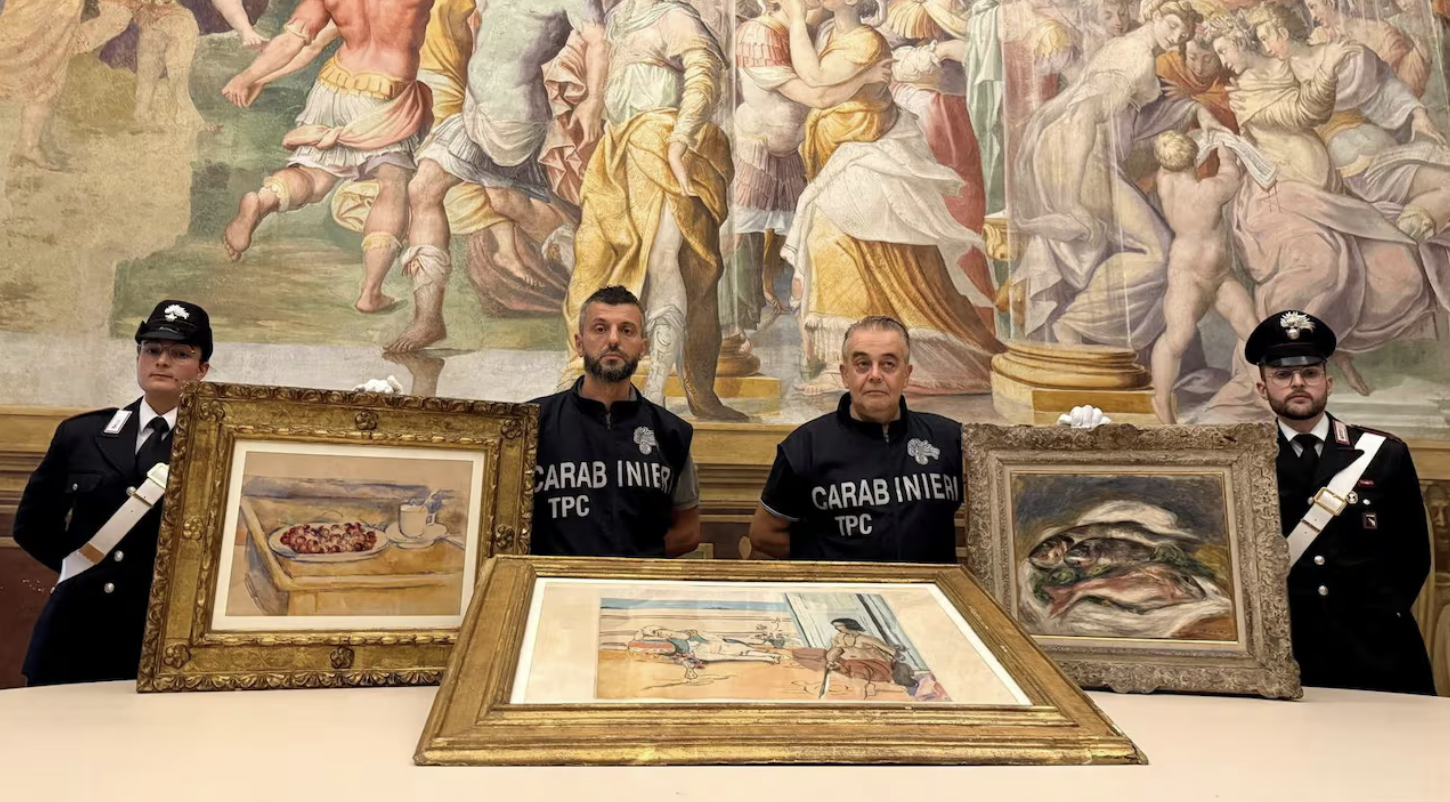
Parma-geddon Averted: The Carabinieri Bring Three Masterpieces Home

The Trouble With 'Fountain'
Marcel Duchamp's 'Fountain' — a signed urinal that founded conceptual art — has repeatedly tempted performance artist Pierre Pinoncelli to urinate in it and, later, attack it with a hammer.

The Bored Guard Who Gave a Painting Eyes
On his very first day, a security guard grew bored and drew two pairs of eyes in ballpoint pen on the faceless figures of Anna Leporskaya's avant-garde painting 'Three Figures'.

The Carmen Tisch Incident
In a single visit, an intoxicated Carmen Tisch allegedly punched, scratched, and slid her butt against a Clyfford Still painting valued in the tens of millions — and, prosecutors said, may have urinated on it (though she reportedly missed).
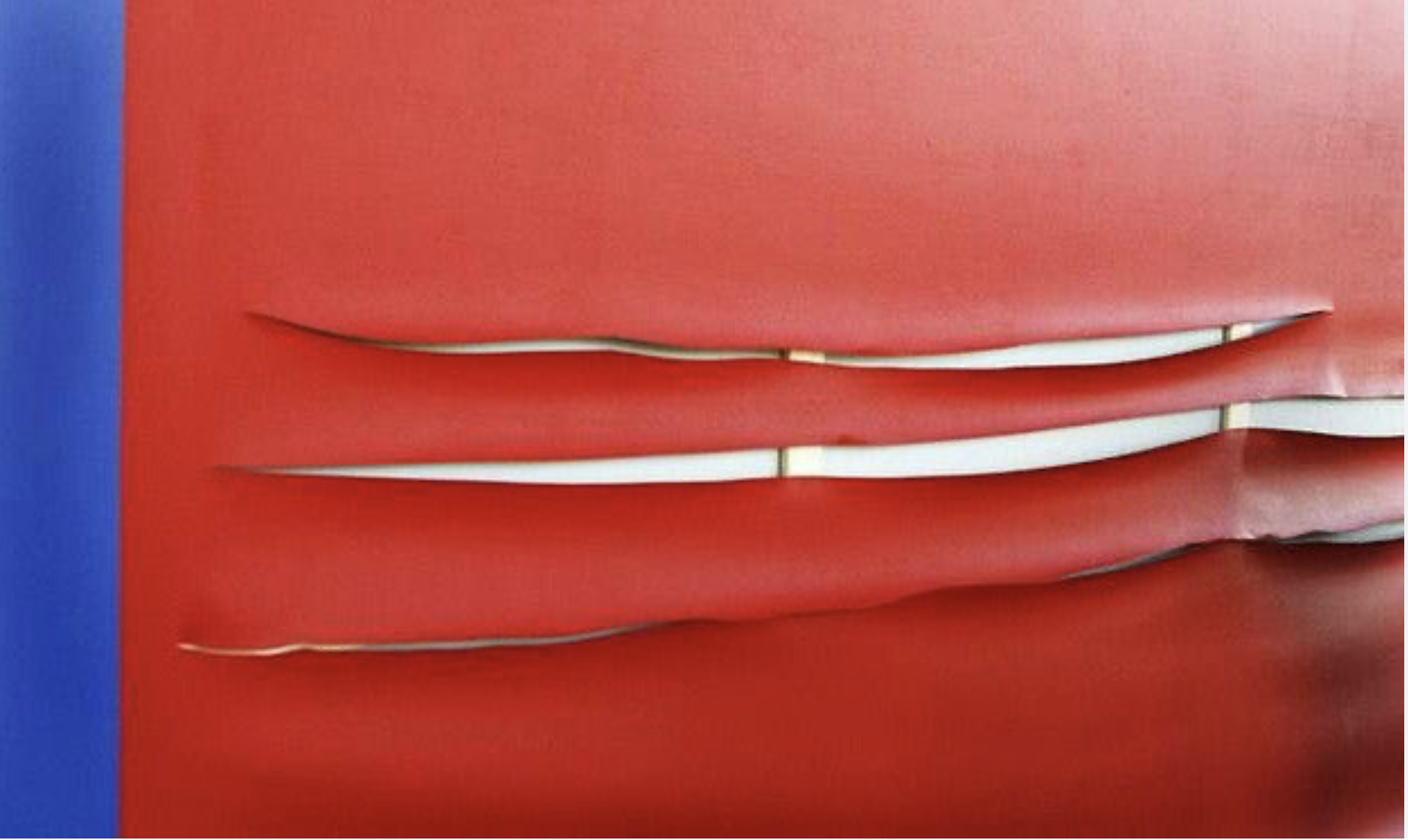
Who's Afraid of a Red, Yellow and Boxcutter
Dutch painter Gerard Jan van Bladeren slashed Barnett Newman's monumental 'Who's Afraid of Red, Yellow and Blue III' dozens of times — and its controversial restoration was later attacked as more damaging than the knife.

Serial Vandal Meets the Renaissance
In April 1988 a serial vandal Hans-Joachim Bolhmann hurled sulfuric acid at Albrecht Dürer's 'Mater Dolorosa', a central panel of the Seven Sorrows Polyptych, permanently damaging parts of the 500-year-old work.

The Princess, the Madonna, and a Wild Water Fight
A 19-year-old man allegedly hurled water at two centuries-old paintings — Ingres' 'The Princesse de Broglie' and Girolamo dai Libri's 'Madonna and Child with Saints' — and tore tapestries from the walls during a bizarre outburst at the Met.

Two Thousand Years, One Bad Afternoon
A man climbed the barriers and jumped nearly six metres into an excavation pit at Xi'an, pushing and pulling the ancient clay soldiers and damaging at least two before guards subdued him.

Thirty Works Destroyed Overnight
Vandals broke into photographer Kamille Lévêque Jégo's exhibition 'Cyprine Benzin' overnight, destroying more than thirty photographs and videos and covering the walls with crude graffiti.

A Member of Parliament Walks Into a Museum
Greek MP Nikos Papadopoulos allegedly tore four framed works by Christophoros Katsadiotis from the walls of an Athens exhibition, shattering their glass, objecting to depictions he considered blasphemous.

The Man Who Punched a Monet
A man punched Claude Monet's 'Argenteuil Basin with a Single Sailboat', tearing a hole through the canvas — later claiming he was protesting the European Union's influence on Ireland.